Describe the Function of the Skin
What specific elements of the skin participate in each of your five functions. The skin functions as our first line of defense against toxins radiation and harmful pollutants.

Skin Structure Epidermis Dermis Subcutis Subcutaneous Layer Or Hypodermis Biologi Kulit Kesehatan
It serves many important functions including Protecting the body against trauma Regulating body temperature Maintaining water and electrolyte balance Sensing painful and pleasant stimuli Participating in vitamin D synthesis.

. Describe how to determine the extent of a burn and differentiate first second and third degree burns. Function Of Skin Protection from the Environment. Detect changes in surroundings or detect stimuli allow any named stimulus for skin 1 convert information to impulse allow send impulse to sensory neurones brain 1.
The skin also synthesizes. Humans possess thick skin that loses less water. Protection against harmful microorganism foreign material and it prevents excessive loss of body fluid.
The dermis is the middle layer of the skin. This is foremost and the most important function of the skin. The skin the human bodys largest organ is home to a diverse and complex variety of innate and adaptive immune functions.
The papillary layer is the strongest portion of the dermis. What type of tissues make up the hypodermis. The skin consists of layers each containing important elements that serve to protect the body against harm.
Following are a 6 general functions of the skin - 1 Protection against pathogens 2 Excretion of waste products 3 Absorption 4 Heat regulation 5 Secretion of. The arrangement of epidermal ridges mixed with sweat create fingerprints. They generate and excrete sebum a mixture of lipids onto the skin surface thereby naturally lubricating the dry and dead layer of keratinized cells of the stratum corneum keeping it pliable.
In deserts the human skin gets thicker to. Despite this potent immune system present at the cutaneous barrier the skin encourages colonization by microorganisms. Healthy skin also maintains the balance of fluids and helps to regular body temperature.
This finely tuned balance between protection from harmful pathogens mostly microorganisms and. Additional functions of the skin include insulation sensation temperature regulation synthesis of vitamin D etc. It contains connective tissue.
It protects the body against physical injuries temperature regulation sunlight infection stores water fat and plays a key role in metabolism including vitamin D among other functions. The skin is the largest organ in the body. The Individual Layers of Skin and Their Functions The Epidermis.
Its thickness depends on where it is located on the. Explain how serious burns are life threatening. The skin the bodys largest organ helps to secure the integrity of the host and at the same time allows the individual to communicate with the outside world.
The skin is the bodys largest organ. The skin is the bodys outer layer which protects it from heat light injury and infection. Skin functions as the bodys first line of defence against bacteria and viruses and is also a vital sensory organ sensitive to the softest touch as well as pain.
Skin contains cells that provide immune functions to protect against infections. 7While doing crosses with plants you find that only one out of two hundred fifty-six individuals in. The outermost region of this barrier is called the stratum corneum SC a dynamic structure with cells migrating in a deep to superficial direction as they mature.
Characterization these microbial communities has enhanced our knowledge of the ecology of organisms. The fatty acids of sebum also have antibacterial properties and prevent water loss from the skin in low-humidity environments. The most important function of the skin is to provide a selectively permeable barrier.
Blood vessels in the dermis supply the epidermis with nutrients. The skin and accessory structures perform a variety of essential functions such as protecting the body from invasion by microorganisms chemicals and other environmental factors. The skin performs six primary functions which include protection absorption excretion secretion regulation and sensation.
Describe the different functions of the skin and the structures that enable them. Collagen is the strongest fiber in the skin. Explain how the skin helps maintain body temperature.
Briefly describe five 5 functions of the skin. The epidermis is the outermost layer of the skin. Which statements describe the function and structure of the skin.
It keeps the pathogens. List the functions of the hypodermis. The 5 functions of the skin are protection sensation heat regulation excretion and absorption.
Temperature Regulation with the sweat heat leaves the body. The Malpighian layer produces the skins pigmentation and protects it against the harmful effects of ultraviolet radiation. The skin has six primary functions that help maintain its homeostasis.
Due to its interfaces with the environment skin plays an important immunity role in protecting the body against pathogens as well as excessive water loss.
Skin Skin Science Skin Anatomy Skin Facts
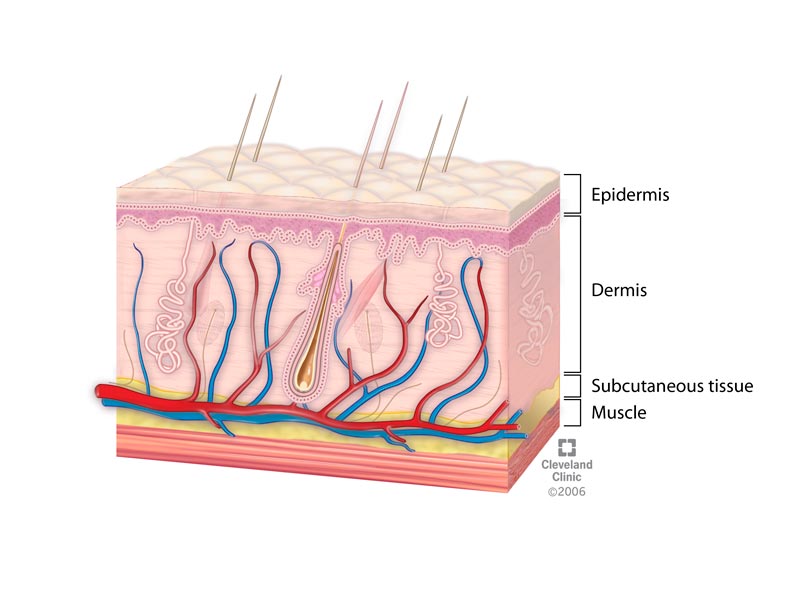
Skin Layers Structure And Function

Pin On Adobe Stock Photos For Sale


Comments
Post a Comment